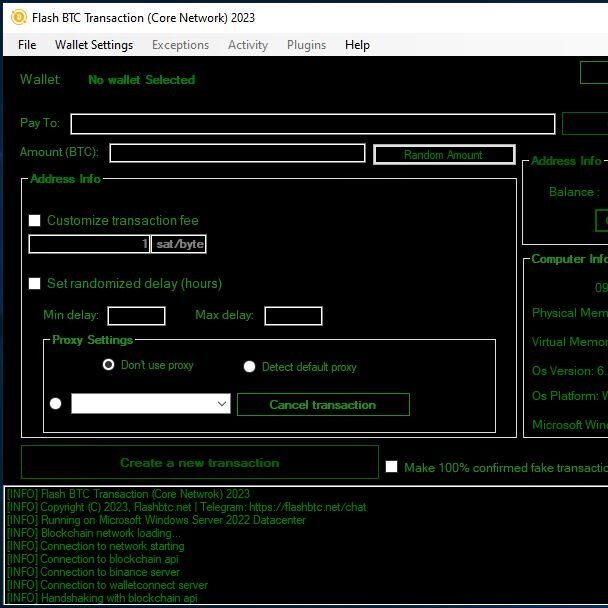

The standard public mempool is a volatile environment where 43% of nodes remain vulnerable to the CVE-2024-52911 exploit as of May 5, 2026, making a specialized bitcoin transaction broadcast testing tool essential for reliable network audits. While average transaction fees sat at $0.3664 on April 28, 2026, the real cost of testing is measured in lost visibility and dropping data packets. You’ve likely experienced the frustration of seeing a critical test broadcast drop from visibility within hours, leaving you without the data needed to verify wallet integration across platforms like Trust Wallet or Binance. It’s a common failure in legacy testing protocols that lack the proprietary infrastructure required for long-term persistence.
This guide demonstrates how to master the technical process of maintaining transaction presence across the blockchain, ensuring your network audits meet the rigorous standards demanded by the 2026 regulatory landscape. We’ll analyze the deployment of the Realflashbtc infrastructure to achieve 600-day visibility for unconfirmed data packets. You’ll learn the specific steps to bypass standard mempool limitations for seamless multi-wallet compatibility and real-time tracking using official, professional-grade licenses. By leveraging our proprietary node infrastructure, you can ensure maximum visibility across all major blockchain explorers without the risk of transaction eviction.
Key Takeaways
- Master the technical process of pushing raw hex data to Bitcoin nodes to conduct high-precision network audits and wallet stress tests.
- Learn why a professional-grade bitcoin transaction broadcast testing tool is required to bypass the standard 72-hour mempool eviction policy.
- Achieve persistent transaction visibility for up to 600 days by utilizing proprietary Core Network infrastructure instead of relying on congested public miners.
- Verify seamless multi-wallet compatibility across leading platforms like Binance and Trust Wallet using real-time tracking features.
- Select the optimal Flash BTC Core Network license tier to scale your testing operations from initial trials to high-volume professional deployments.
Understanding the Role of Transaction Broadcasting in Blockchain Testing
Transaction broadcasting is the technical process of injecting raw hex data into the peer-to-peer network to inform nodes of a pending state change. It’s the critical bridge between offline transaction construction and on-chain presence. For fintech developers and wallet service providers, this stage is where the most significant integration risks appear. In 2026, the complexity of this process has increased due to the implementation of the Digital Financial Assets Law on July 1, 2026, which demands higher transparency in transaction tracking. Relying on basic tools is no longer sufficient for professional-grade audits. A specialized bitcoin transaction broadcast testing tool allows engineers to simulate high-load environments and verify how different wallet infrastructures handle unconfirmed data before it reaches a miner’s block.
The standard mempool relay logic in 2026 is increasingly restrictive. As of April 28, 2026, average transaction fees reached $0.3664, causing many public nodes to purge low-priority data packets almost immediately. This creates a visibility gap for developers who need to test long-term transaction persistence without immediate confirmation. Professional-grade testing now requires proprietary infrastructure to bypass these public mempool limitations, ensuring that test broadcasts remain visible across global blockchain explorers for extended periods.
The Lifecycle of a Broadcasted Transaction
The lifecycle begins with the generation of a signed raw hex string. This string contains the input and output data necessary for Bitcoin’s blockchain technology to recognize the request. Once this hex is pushed to a node, it undergoes a validation check against the latest Bitcoin Core version 31.0, which was released on April 19, 2026. If the data is valid, it propagates to peer nodes. However, 43% of nodes are currently running vulnerable pre-v29 software, which may lead to relay failures or data drops. Common points of failure in public broadcasting tools include insufficient peer connections and the inability to handle the CVE-2024-52911 security patches disclosed on May 5, 2026. Our proprietary Core Network eliminates these failures by utilizing a dedicated node array for guaranteed propagation.
Visibility vs. Confirmation: A Technical Distinction
Technical observers often confuse transaction visibility with block confirmation. A transaction appearing in the UI of Binance or Trust Wallet indicates that the broadcast was successful and the data is currently sitting in the mempool. It doesn’t mean the transaction is permanent. Standard public broadcasts are subject to a 72-hour eviction policy, where unconfirmed transactions are deleted to save node memory. The Flash BTC Core Network changes this dynamic by providing a 600-day visibility window for unconfirmed data. This allows for deep-cycle testing of wallet recovery and notification APIs. Unconfirmed visibility is a technical metric defining the success of a network audit by measuring the persistence of a transaction across global blockchain explorers. Utilizing a bitcoin transaction broadcast testing tool with proprietary node support ensures your data remains trackable long enough to complete comprehensive system stress tests.
Essential Features of a Professional-Grade Testing Tool
A professional-grade bitcoin transaction broadcast testing tool must offer capabilities that extend far beyond the basic hex-pushing interfaces found on public explorers. In the high-stakes environment of 2026, where the EU’s MiCA transitional period ends on July 1, 2026, technical compliance and audit accuracy are paramount. Professional tools must provide multi-wallet compatibility, ensuring that broadcasted data is visible across elite platforms like Binance, Coinbase, and Trust Wallet. Standard tools often fail to penetrate the specific node clusters used by these exchanges for real-time balance updates, leading to failed audits and inaccurate data. Our proprietary software solves this by establishing direct connections to the most influential nodes in the ecosystem.
Scalability is another non-negotiable requirement for serious fintech developers. A clinical audit requires the ability to handle high daily transaction volumes rather than single, isolated entries. This high-volume performance allows for the simulation of real-world network congestion, providing a clear picture of how wallet APIs respond to persistent unconfirmed traffic. Real-time tracking and propagation status monitoring are integrated directly into the Core Network, offering a level of transparency that public miners cannot match.
Cross-Chain and Protocol Support
Isolation is a liability in modern decentralized finance. As of May 2026, developers require robust BEP20 cross-chain support to verify how Bitcoin data interacts with multi-network environments. Flash BTC software manages these complex simulations by ensuring visibility across diverse blockchain explorers simultaneously. This level of technical scrutiny is vital for Bitcoin transaction graph analysis, where researchers track the flow of unconfirmed data across multiple protocols to identify latency bottlenecks. By maintaining integrity across different explorers, the tool provides a unified view of the network’s state, which is essential for meeting the “Genius Act” regulations due by July 18, 2026.
Proprietary Core Network Infrastructure
Public miners prioritize immediate block inclusion, often purging their mempools every 72 hours to reduce memory overhead. This purge makes long-term testing impossible with standard tools. The Flash BTC Core Network utilizes a dedicated node relay system to bypass these limitations entirely. We maintain a 600-day visibility window for all broadcasted data, providing a stable environment for long-term network research. This proprietary infrastructure ensures that your test transactions remain visible and trackable long after public nodes have evicted them. To secure this level of persistent visibility for your own infrastructure, you can explore our specialized license options for the Core Network. Our dedicated infrastructure handles the heavy lifting, allowing you to focus on the results of your audit.
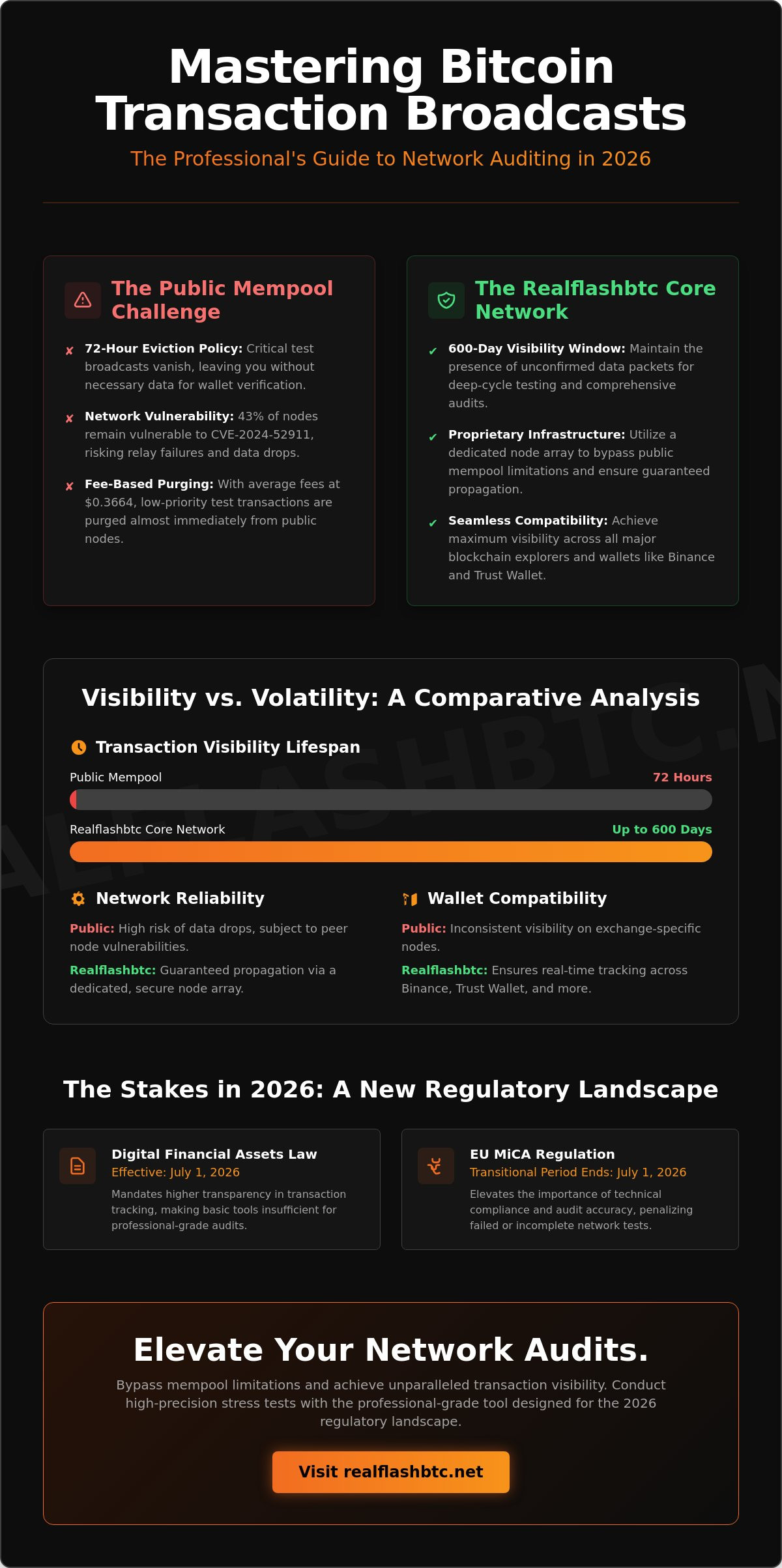
Step-by-Step Guide: Broadcasting Unconfirmed Transactions for Visibility Testing
Executing a professional network audit demands a systematic technical workflow. You must move from raw data construction to proprietary relay propagation with clinical precision. A professional-grade bitcoin transaction broadcast testing tool provides the necessary framework for this progression. It’s not just about pushing data; it’s about ensuring that data reaches the specific node clusters required for 600-day visibility across the blockchain. This process bypasses the standard limitations of public miners, allowing for deep-cycle testing of wallet integration and API response times. Follow these steps to ensure your test transactions achieve maximum visibility and persistence.
Generating and Validating Raw Hex Data
Construction of the raw hex string is the first critical failure point in network testing. Use the latest Bitcoin Core version 31.0, released on April 19, 2026, to generate your transaction data. Utilize the createrawtransaction command to define your inputs and outputs. Pay close attention to the scriptPubKey and sequence values; common syntax errors here will cause immediate rejection by the Core Network. Before broadcasting, run the decoderawtransaction check to verify the hex string’s integrity. Professional audits require this pre-validation to ensure the test data mimics real-world transaction structures. This rigor prevents unnecessary resource waste and ensures that your bitcoin transaction broadcast testing tool functions with 100% efficiency.
Managing the Broadcast via Flash BTC Software
Once your data is validated, you must transition to the execution phase using our proprietary software suite. Install the official Flash BTC Core Network package on your local node to establish a direct link to our relay infrastructure. You must then activate your specific license tier to unlock the required daily volume capacities. The Flash BTC Core Network Trial License is the standard entry point for initial connectivity checks. For larger scaling requirements, the Basic or Premium licenses provide the bandwidth needed for high-volume simulations. After activation, use the broadcast command to push your hex string. The software will immediately initiate peer-to-peer node propagation, bypassing the congested public mempools that often drop unconfirmed packets within 72 hours.
Verification is the final stage of the audit. Monitor the transaction status across multiple blockchain explorers to confirm the propagation was successful. You should see the transaction appearing in recipient wallets like Binance or Trust Wallet within seconds. Unlike public broadcasts, these transactions remain visible for up to 600 days, allowing your team to conduct long-term research on wallet synchronization and mempool behavior. If you encounter any latency during the propagation phase, our technical support team is accessible via Telegram for real-time troubleshooting and infrastructure optimization.
Public Explorers vs. Proprietary Core Networks: A Comparative Analysis
Standard public explorers are designed for basic transparency, not technical persistence. While a casual user might utilize Blockstream to push a single hex string, professional-grade audits require a more robust bitcoin transaction broadcast testing tool. Public infrastructure is bound by the default mempool relay policy, which often purges unconfirmed transactions after a 72-hour period of non-confirmation. This volatility makes long-term network simulation impossible for serious developers. In contrast, proprietary Core Networks are engineered for high-volume performance and data retention, ensuring your test data remains active across the blockchain.
Reliability is the primary differentiator between these two environments. Public nodes frequently suffer from congestion, leading to unpredictable relay latencies. During the fee spike observed on April 28, 2026, where costs rose 11.13% in a single day, public tools struggled to maintain visibility for low-fee test packets. A proprietary bitcoin transaction broadcast testing tool bypasses these bottlenecks by utilizing a dedicated node array. This infrastructure provides the capacity for high-volume automated testing that single-entry public tools can’t support.
When to Use Public Broadcasting Tools
Public tools like Blockchain.com are suitable for low-volume scenarios where immediate block inclusion is expected. They provide a simple interface for basic connectivity checks. However, these platforms carry significant risks for high-stakes testing. Public tools often fail during periods of high network congestion because they lack the proprietary relay logic needed to prioritize unconfirmed data. You also won’t find dedicated technical support on these platforms. Developers are typically left to resolve complex relay failures by searching through community forums rather than receiving official assistance.
The Advantage of the Flash BTC Core Network
The Flash BTC Core Network Trial License serves as the essential entry point for researchers needing guaranteed visibility. Unlike public explorers, our proprietary infrastructure maintains a 600-day visibility window for all broadcasted data. This allows for the simulation of “Full Confirmation” status in UI testing environments, ensuring that transactions appear consistently in major exchange wallets. This level of reliability is critical for verifying how platforms like Binance or Trust Wallet handle unconfirmed traffic over extended periods. Our proprietary protocols ensure that transactions remain visible across the blockchain, even when public mempools are purging data.
Professional users also benefit from 24/7 technical assistance via our dedicated Telegram channel. This direct line of communication ensures that any propagation issues are resolved with clinical efficiency. To transition from limited public tools to a high-performance auditing environment, you should upgrade to a professional Core Network license today. Our infrastructure provides the scale and stability required for next-generation blockchain testing and comprehensive network audits.
Scaling Your Operations with Flash BTC Core Network Licenses
Scaling your operations in the 2026 decentralized finance sector requires a bitcoin transaction broadcast testing tool that matches the intensity of global market shifts. The Flash BTC Core Network provides a tiered infrastructure designed to grow with your technical requirements. Whether you’re conducting a preliminary audit or a high-volume network simulation, our proprietary node relay system ensures your data packets maintain visibility without the risk of mempool eviction. This is particularly vital as the July 1, 2026 deadline for demonstrating absolute transparency in transaction tracking protocols approaches, reflecting evolving industry and regulatory demands. Our licenses are engineered to provide this level of technical certainty through a dedicated, official infrastructure.
The Flash BTC Core Network Trial License provides a clinical entry point for researchers who need to verify initial connectivity and hex propagation. It’s the standard choice for small-scale audits. As your project expands, the Basic License offers the capacity for consistent daily transaction volumes, allowing for more rigorous stress testing of wallet APIs. For elite fintech firms and high-tier architects, the Premium License represents the industry standard. This tier supports the highest volume of concurrent broadcasts, ensuring your testing environment remains ahead of the rigorous compliance standards and future-proofing requirements anticipated by July 18, 2026. Future-proofing your strategy means moving away from the 72-hour limits of public nodes and adopting a proprietary solution with a 600-day visibility benchmark.
Choosing the Right License for Your Project
Selecting the optimal tier depends on your specific testing volume and the duration required for your network research. While the Trial tier is perfect for one-off validations, the Premium tier is designed for perpetual simulation. High-tier simulation requires a cost-benefit analysis that favors proprietary software; the efficiency gained by avoiding public node congestion far outweighs the initial license acquisition. Each tier maintains our signature 600-day visibility window, ensuring that your unconfirmed data remains trackable across blockchain explorers for the duration of your audit cycle. You can upgrade your infrastructure seamlessly as your testing requirements grow, moving from basic validation to full-scale network dominance.
Deployment and Technical Support
Installing the Core Network software suite is a direct, imperative process. Once you’ve downloaded the official package, follow the command-line prompts to activate your license and establish a secure link to our proprietary node array. If you encounter technical bottlenecks or require real-time troubleshooting, our elite support team is available 24/7 via Telegram. This crypto-native support channel ensures that your network audits never face downtime. We provide immediate assistance for hex validation, propagation status, and multi-wallet compatibility issues. Don’t leave your network visibility to chance in a volatile market. Secure your official Flash BTC Core Network license today and take command of your blockchain testing infrastructure with professional-grade precision.
Secure Your Network Audit Infrastructure for 2026
The 2026 regulatory landscape, specifically the Digital Financial Assets Law taking effect on July 1, 2026, demands a level of technical precision that standard public explorers can’t provide. You’ve seen how proprietary node infrastructure bypasses the 72-hour mempool purge to provide a 600-day visibility window. Using a professional-grade bitcoin transaction broadcast testing tool is no longer optional for serious fintech developers. It’s a structural necessity for reliable audits. By moving beyond public node congestion, you ensure your unconfirmed data packets remain visible across all major blockchain explorers without interruption.
Real-time tracking and seamless multi-wallet integration are the benchmarks of our Core Network. It’s time to transition from trial connectivity to high-volume performance simulations. Upgrade to the Flash BTC Core Network Premium License for maximum visibility and leverage our official 2026 proprietary infrastructure. This ensures full compatibility with Binance and Coinbase while maintaining the 600-day visibility standard for every broadcast. Take command of your blockchain audits with professional-grade tools that deliver clinical results. Your technical dominance in the decentralized market starts here.
Frequently Asked Questions
How long does a transaction stay visible when using a professional broadcast tool?
Transactions remain visible for a technical benchmark of 600 days when pushed through our proprietary node infrastructure. This duration far exceeds the standard 72-hour window found in public mempools, providing researchers with the stability needed for long-term network audits. This persistence ensures that test data stays trackable across blockchain explorers throughout the entire research cycle without the risk of immediate data eviction.
Can I send unconfirmed transactions to major exchanges like Binance or Coinbase?
Yes, our software ensures full multi-wallet compatibility across leading platforms including Binance, Coinbase, and Trust Wallet. Broadcasted data appears as an unconfirmed balance in the recipient’s UI within seconds of propagation. This capability is essential for fintech developers who must verify how exchange APIs and notification systems handle incoming data packets during high-load network stress tests in the 2026 ecosystem.
What is the difference between a trial and a premium license for broadcasting software?
The Trial License serves as the official entry point for initial connectivity checks and low-volume testing. In contrast, the Premium License is the industry standard for high-tier simulations, offering the maximum daily transaction volume required by enterprise-level firms. Upgrading to the Premium tier provides the necessary scale to meet the rigorous audit requirements of the Digital Financial Assets Law taking effect on July 1, 2026.
Is it possible to broadcast Bitcoin transactions without immediate confirmation?
Yes, a specialized bitcoin transaction broadcast testing tool is designed specifically to push unconfirmed hex data into the global mempool. This process allows engineers to simulate real-world network traffic and test wallet UI responses without the need for block inclusion. It’s a critical tool for identifying latency bottlenecks and verifying the integrity of transaction relay logic across different node clusters.
How do I track the propagation of my flash transaction across the network?
You can track propagation status in real-time through our proprietary software dashboard and all major blockchain explorers. The tool monitors how raw hex data moves across the peer-to-peer network, providing status updates on node acceptance. If you encounter any propagation delays, our technical support team is accessible via Telegram to provide real-time troubleshooting and infrastructure optimization for your specific audit requirements.
What happens after the 600-day visibility window expires?
Once the 600-day window expires, the transaction data is purged from our proprietary node memory to maintain system efficiency. This timeframe is designed to be significantly longer than any standard audit cycle, allowing for deep-cycle research and multi-stage verification. It’s a professional-grade standard that ensures your data remains active long after public nodes have cleared their mempools of unconfirmed traffic.
Is the Flash BTC Core Network compatible with Trust Wallet?
Full compatibility with Trust Wallet is a standard feature of the Flash BTC Core Network infrastructure. Test broadcasts appear instantly within the Trust Wallet interface, allowing you to verify balance updates and push notification triggers. This ensures that your network testing covers the most widely used mobile wallet platforms, which is essential for comprehensive multi-wallet compatibility audits in today’s decentralized market.
Why do transactions broadcasted via public tools disappear after 72 hours?
Public nodes follow a default mempool relay policy that purges unconfirmed transactions every 72 hours to optimize memory overhead. This purge frequency often increases during periods of high congestion, such as the fee spike observed on April 28, 2026. Utilizing a proprietary bitcoin transaction broadcast testing tool allows you to bypass these public purge cycles by leveraging a dedicated node array for guaranteed data persistence.