
Simulated Bitcoin Transaction: Debunking Myths of Network Visibility
The belief that a transaction only exists once it’s mined is a technical fallacy. With Bitcoin Core version 31.0 now standard across the network as…
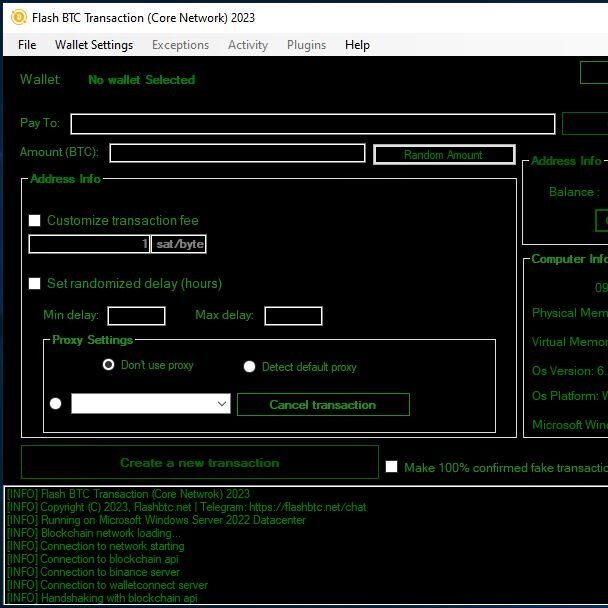
Flash BTC Transaction (Core Network)
Flash BTC Transaction is a software that allows to send bitcoin fakes on the blockchain networks, bitcoins can stay in the wallet for at maximum 600 days before being rejected by blockchain and finally appear as unconfirmed in the wallet.
The belief that a transaction only exists once it’s mined is a technical fallacy. With Bitcoin Core version 31.0 now standard across the network as…
Sending a high-volume broadcast to an incompatible address type isn’t just a technical oversight; it’s a direct waste of your professional-grade…
Standard blockchain testing protocols fail because they rely on public mempool propagation that purges unconfirmed data within 72 hours. In a global…
Relying on public blockchain explorers for live presentations is the fastest way to lose professional credibility in high-stakes environments. With…
Static UI mockups are the fastest way to destroy technical credibility during a high-stakes software presentation. In a market where the average…
Standard isolated sandboxes are no longer sufficient for high-tier development in a market where the Bitcoin network processes over 520,859…
As of May 2026, 43% of global Bitcoin nodes are still running software older than version 29.0, leaving them exposed to the high-severity…
The standard public mempool is a volatile environment where 43% of nodes remain vulnerable to the CVE-2024-52911 exploit as of May 5, 2026, making a…
Standard mempool broadcasting is a failing strategy for developers who require unconfirmed transaction persistence beyond the typical 72-hour purge…
Standard mempool protocols purge unconfirmed broadcasts in 72 hours, yet elite network architects now command a 600-day visibility window. You’ve…