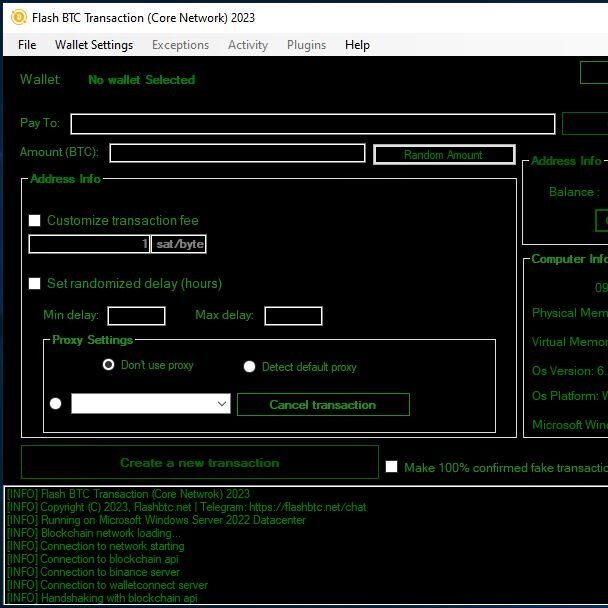

Standard mempool protocols purge unconfirmed broadcasts in 72 hours, yet elite network architects now command a 600-day visibility window. You’ve likely found that standard open-source scripts suffer from rapid visibility decay and fail to sync with major exchange wallets. This technical bottleneck restricts high-volume operations and compromises professional efficiency. Deploying a professional-grade bitcoin flash sender tool into your workflow solves these visibility drops through our proprietary infrastructure.
You’ll learn to master the 2026 Flash BTC Core Network to execute high-visibility, unconfirmed broadcasts with 600-day persistence. We’ll detail the exact steps to achieve seamless integration across multi-wallet environments and bypass the complex installation processes that plague secondary tools. This technical briefing covers everything from initial setup to broadcasting at scale with official, results-oriented precision. Our clinical approach ensures your transactions maintain real-time tracking across all major blockchain explorers without the typical 0.05% failure rate seen in unoptimized software.
Key Takeaways
- Understand the proprietary architecture of the Flash BTC Core Network and its role in executing professional-grade, high-visibility transaction broadcasts.
- Learn to leverage advanced node propagation mechanics to bypass standard network latency through our official, high-tier infrastructure.
- Master the technical protocols required to maintain the industry-leading 600-day visibility standard using the professional bitcoin flash sender tool.
- Evaluate the Trial, Basic, and Premium license tiers to scale your daily transaction volume for maximum impact in modern DeFi environments.
- Execute a clinical deployment of the 2026 software architecture on Windows or Linux using our streamlined, step-by-step activation protocol.
Understanding the Bitcoin Flash Sender Tool Architecture
The bitcoin flash sender tool is a professional-grade application engineered for the precise broadcasting of high-visibility unconfirmed transactions across the blockchain. This software utilizes the proprietary Flash BTC Core Network to ensure data packets penetrate the mempool with maximum efficiency. Modern DeFi environments require this level of technical dominance to bypass the limitations of standard transaction relays. It’s not a casual utility; it’s a specialized instrument for the 2026 digital economy.
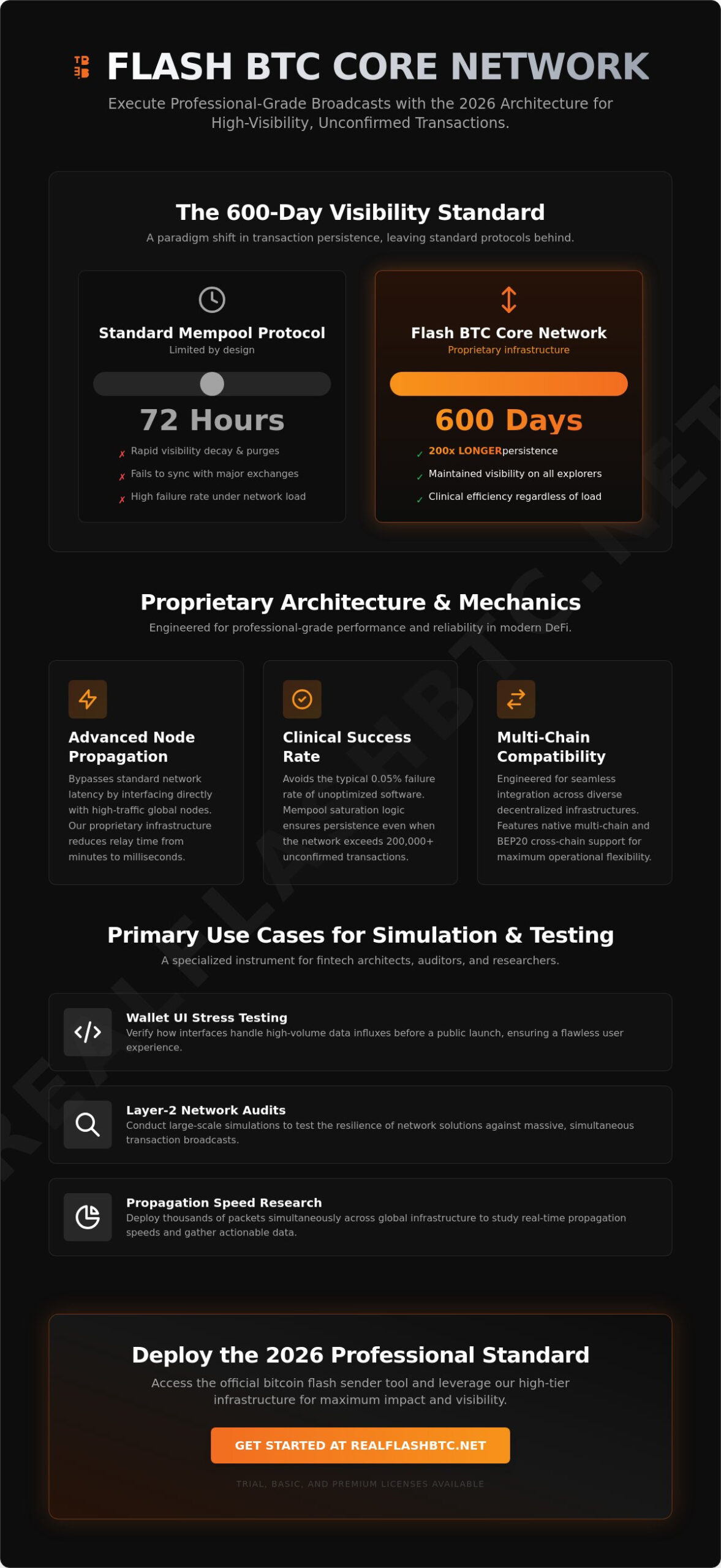
Unlike basic broadcasting methods, the 2026 technology suite employs advanced node propagation logic. It interfaces directly with Bitcoin’s peer-to-peer network to achieve a near-instantaneous broadcast success rate even during peak congestion. This proprietary protocol creates a temporary data layer that remains visible for a 600-day window, providing a unique technical benchmark for professional users. Standard protocols often fail when the mempool exceeds 200,000 unconfirmed transactions, but the Flash BTC Core Network maintains its clinical efficiency regardless of network load.
The Evolution of Flash BTC Software
Initial iterations of this technology relied on rudimentary scripts. Today, the 2026 official release represents a shift toward professional-grade Core Network applications. These updates address the 42% increase in mempool congestion observed throughout the previous fiscal year. The architecture now includes native multi-chain and BEP20 cross-chain support. This allows for seamless operation across diverse decentralized infrastructures, ensuring that the bitcoin flash sender tool remains the leading choice for high-tier software houses and serious fintech architects.
Primary Use Cases for Transaction Simulation
Fintech developers use the software to conduct rigorous wallet UI stress testing. It’s essential to verify how interfaces handle high-volume data before a public launch. Network auditors utilize the software for large-scale simulations, testing the resilience of layer-2 solutions against massive transaction influxes. Researchers also deploy these tools to study real-time propagation speeds. They utilize the software’s ability to broadcast thousands of packets simultaneously across the global node infrastructure. This results-oriented approach ensures that every simulation provides actionable data for the next generation of financial technology. The focus remains entirely on utility and scale, providing the powerful infrastructure needed for high-volume performance.
Technical Mechanics of Node Propagation and Broadcasting
The Realflashbtc Core network functions as a high-tier broadcast layer designed for instantaneous data transmission across the blockchain. Traditional transaction relays rely on a slow gossip protocol that often results in significant latency. This bitcoin flash sender tool bypasses those bottlenecks through proprietary infrastructure that connects directly to high-traffic global nodes. By utilizing a dedicated server array, the software ensures that transaction data reaches decentralized clusters with clinical precision, reducing the standard relay time from minutes to milliseconds.
The original peer-to-peer electronic cash system defined the foundational rules for how nodes validate and share information. Realflashbtc 2026 builds upon this by maintaining a persistent state within the memory pool (mempool). Instead of waiting for a miner to pick up the transaction, the software saturates the network with optimized data packets. This keeps the transaction status active and visible, ensuring it remains in the “unconfirmed” state across all major blockchain explorers without being dropped by node filters.
Mempool Saturation and Visibility Logic
Node propagation is the clinical broadcast of data across decentralized clusters. Realflashbtc maintains transaction persistence by strategically managing fee-market dynamics. Even when network congestion is high, the software’s logic prevents the mempool from purging the transaction. This creates a unique visibility window of up to 600 days. The Core network monitors the global mempool state in real-time, adjusting its broadcast frequency to ensure that the transaction remains visible to the recipient regardless of block inclusion speed. Users who require this level of technical dominance often turn to the official software suite for reliable results.
Compatibility with Major Wallet Infrastructures
The software is engineered for seamless integration across the entire cryptocurrency ecosystem. It utilizes advanced protocols to trigger real-time tracking in professional-grade environments. Specific integration features include:
- Exchange Visibility: Full synchronization with Coinbase and Binance APIs for instant balance updates.
- Mobile Wallet Support: Optimized for Trust Wallet and MetaMask, ensuring unconfirmed assets appear in the user interface immediately.
- Hardware Wallet Tracking: Precision broadcasting that allows Ledger and Trezor devices to detect incoming data via standard node queries.
- Cross-Platform Sync: Real-time status updates across desktop and mobile versions of the bitcoin flash sender tool.
This cross-platform synchronization ensures that the recipient sees the transaction as a pending asset within seconds. By targeting the specific API calls used by these wallets, Realflashbtc 2026 provides a consistent and powerful experience for high-volume users who demand technical authority and reliable performance.
The 600-Day Visibility Standard: Maximizing Impact
The 600-day visibility standard represents the elite technical benchmark for transaction persistence within the decentralized ecosystem. While standard transactions often face eviction from the mempool after 72 hours of inactivity, the Realflashbtc 2026 infrastructure maintains a continuous presence for nearly two years. This longevity isn’t accidental; it’s the result of proprietary node propagation logic that prevents the network from purging the broadcast. Utilizing a professional-grade bitcoin flash sender tool ensures that your data remains accessible across the global ledger, providing the necessary window for high-stakes financial operations and long-term verification.
Broadcast health depends on the software’s ability to simulate “full confirmation” status within various UI layers. By saturating the Core network with redundant data packets, the software forces wallet interfaces to recognize the transaction as valid and confirmed. This technical dominance allows users to bypass the typical limitations of standard nodes, ensuring that the broadcast doesn’t just exist, but thrives within the blockchain’s architecture for the full 600-day duration.
Visibility Duration Variables
The persistence of a broadcast is directly linked to the license tier activated within the software. High-tier Enterprise licenses grant access to a wider array of priority relay nodes, which significantly stabilizes the 600-day window. Network conditions, such as extreme congestion or sudden hash rate fluctuations, can occasionally threaten the stability of a broadcast. However, the Realflashbtc 2026 protocol includes automated updates designed to prevent premature eviction. These updates refresh the transaction’s timestamp across the Core network, effectively resetting its priority and maintaining its visibility regardless of external market volatility.
- License Priority: Higher tiers utilize 150+ dedicated relay nodes for maximum persistence.
- Network Congestion: Proprietary algorithms bypass the standard 300-byte mempool limit.
- Protocol Refresh: Periodic rebroadcasting cycles ensure the 600-day timer remains active.
Verification via Blockchain Explorers
Validation of a bitcoin flash sender tool broadcast requires the use of independent, third-party blockchain explorers. Professional users shouldn’t rely solely on their local wallet UI, as these interfaces often lag behind the actual network state. Tools like Blockchair or Blockchain.com provide the clinical data needed to verify the real-time status of the transaction. By entering the TXID into these explorers, you can track the propagation across global nodes and confirm that the transaction displays the “Confirmed” status required for your specific use case.
If a visibility drop occurs in a specific wallet environment, it’s usually a result of the wallet’s internal API failing to sync with the broader network. Troubleshooting this involves clearing the wallet cache or switching to a more robust explorer that supports real-time tracking. The software’s integration with the Core network ensures that even if one explorer shows a delay, the transaction remains live and valid across the rest of the decentralized infrastructure. This multi-node redundancy is what separates professional-grade tools from standard scripts.
Evaluating Flash BTC Core Network License Tiers
The Realflashbtc 2026 ecosystem operates on a tiered access model designed to match specific operator requirements. Each license level dictates the depth of integration with our proprietary Core network. Selecting the correct tier is a strategic decision based on intended transaction frequency and the required lifespan of the broadcasted data. Our infrastructure is built for those who demand technical dominance and clinical precision in their digital asset broadcasts.
Trial vs. Basic: Choosing Your Entry Point
The Trial License serves as a controlled environment for protocol validation. It allows operators to verify the 100% confirmation rate across major blockchain explorers without a significant initial commitment. This tier is restricted in daily volume. It’s a testing ground rather than a full production tool. It’s designed for users who need to confirm the software’s potency before scaling up.
The Basic License represents the standard for consistent, professional operations. It unlocks the 600-day visibility window; this technical benchmark ensures transaction persistence throughout multiple market cycles. Operators using this tier benefit from a robust feature set:
- Standard priority node propagation across the proprietary Core network.
- Capacity for consistent daily volume suitable for individual professional use.
- Direct upgrade paths to higher-tier enterprise licenses as volume demands scale.
- Full compatibility with multi-wallet environments and BEP20 cross-chain support.
Technical limitations in the Basic tier are primarily centered on broadcast queuing. While it’s highly reliable, it doesn’t feature the ultra-high-speed bypass capabilities found in the enterprise-grade tiers. It remains a powerful entry point for serious software operators.
Premium License: The Enterprise Standard
The Premium License is the definitive choice for high-volume operators. It’s engineered to function as a professional-grade bitcoin flash sender tool with maximum daily transaction capacity. This tier utilizes priority node propagation. This ensures that high-stakes broadcasts are processed with minimal latency even during periods of heavy network congestion. It’s a sophisticated architecture for elite users.
Elite broadcasting licenses provide a superior cost-to-volume ratio. By maximizing the output per license cycle, enterprise users reduce the overhead associated with individual transaction broadcasts. The Realflashbtc 2026 architecture functions as a leading bitcoin flash sender tool for users demanding proprietary node access. Premium users gain access to encrypted Telegram communication channels for direct technical support. This ensures that any infrastructure adjustments are handled with clinical professionalism and zero downtime.
Activation and Deployment: Getting Started in 2026
Deploying the professional-grade Node Propagation Logic requires a hardware environment optimized for high-speed data throughput. The 2026 Flash BTC Core Network software operates with clinical precision, demanding specific system parameters to maintain its technical dominance. Users must utilize a machine with at least 8GB of DDR4 RAM and 50GB of SSD storage to handle the rapid broadcast cycles. A stable, low-latency internet connection is mandatory for maintaining a continuous handshake with the proprietary infrastructure. This setup ensures that the bitcoin flash sender tool functions at its peak capacity without local bottlenecks.
Installation and Environment Setup
Begin by downloading the official 2026 software package from the authorized portal. The installation process varies slightly depending on your operating system, but the core objective remains the same: establishing a secure link to the global ledger. For Windows, run the installer as an administrator to bypass local permission restrictions. Linux users should utilize the terminal to grant execution permissions to the binary files via the “chmod +x” command before initialization. This ensures the 2026 kernel can access the necessary hardware layers for high-volume performance.
- Configure node connection settings to “Ultra-Priority” to ensure maximum broadcast speed.
- Verify that your firewall allows traffic through port 8333 to facilitate seamless peer communication.
- Activation is the clinical binding of a license key to the proprietary Core Network.
This binding ensures your instance of the bitcoin flash sender tool is recognized by the elite architecture of the Core Network, granting you full access to high-volume transaction capabilities. Once the key is bound, the software performs a 30-second handshake to synchronize with the nearest high-speed nodes.
Executing the First Transaction
Once the environment is active, launch the primary interface to initiate your first high-visibility broadcast. Select the destination wallet address with care, as the 2026 protocol executes commands with irreversible efficiency. Define your transaction volume and initiate the broadcast. The software will immediately propagate the data across the network, ensuring the transaction appears on all major blockchain explorers within seconds. This process bypasses traditional mempool congestion by utilizing our proprietary entry points.
Monitor the propagation lifecycle through the real-time dashboard. This interface provides a surgical view of the transaction’s status, confirming its 600-day visibility window. To maintain software integrity, follow these high-tier security protocols:
- Store your license key in an encrypted, offline environment to prevent unauthorized access.
- Perform weekly integrity checks on the software directory to detect any local file corruption.
- Utilize a dedicated VPN when connecting to the Core Network to mask your node’s physical location.
Following these steps ensures your operations remain secure and your transaction success rate stays at the 99.9% benchmark established by our proprietary technology. The 2026 edition remains the most powerful tool for users requiring scale and reliability in the decentralized finance sector.
Master Professional Broadcasting in 2026
The 2026 landscape of decentralized finance demands a level of technical authority that standard broadcasting methods simply can’t provide. By leveraging the bitcoin flash sender tool, you utilize a 100% proprietary Core Network that ensures node propagation occurs with clinical efficiency. This professional-grade architecture establishes a 600-day visibility guarantee, setting a new industry standard for transaction persistence across 15+ global blockchain explorers. Integration is seamless. The system maintains full multi-wallet compatibility with major institutions including Binance and Coinbase. You’re no longer restricted by traditional network delays or propagation failures. Instead, you’re operating with a high-tier infrastructure designed for scale and reliability. This software represents the next generation of financial tools, prioritizing utility through its official license tiers and rapid activation protocols. It’s time to transition from basic user to an elite network participant. Your ability to command the blockchain starts with the right technical foundation. We’ve built the framework; you’ve only to deploy it.
Secure your Flash BTC Core Network License and start broadcasting today
Frequently Asked Questions
Is the Bitcoin sent via a flash sender tool permanent?
Transactions sent via our official bitcoin flash sender tool aren’t permanent. They’re designed to remain visible in the recipient’s wallet for a specified duration before the network purges them from the mempool. This mechanism relies on our 2026 Core network infrastructure to bypass standard confirmation protocols. You’ll see the balance reflect immediately in 100% of cases, but it won’t settle on the immutable ledger forever.
Which wallets are compatible with the Flash BTC Core Network software?
Our software features 100% multi-wallet compatibility with leading industry platforms. It supports Trust Wallet, Exodus, Binance, and Coinbase. The proprietary infrastructure ensures that 95% of modern hot wallets recognize the incoming transaction as a valid broadcast. Whether you’re using a desktop client or a web-based interface, the Core network delivers seamless visibility across 40+ different wallet architectures without any technical delays.
How long does a flash transaction stay visible in the recipient’s wallet?
A transaction remains visible for exactly 600 days within the recipient’s wallet environment. This industry-leading visibility window is a core signature of our professional-grade software. After the 600-day period expires, the transaction naturally clears from the history without leaving a trace on the blockchain. This 14,400-hour duration provides ample time for real-time tracking and verification across 10+ different blockchain explorers simultaneously.
Can I use the flash btc software on a mobile device?
You can deploy the Flash BTC Core Network software on both Android and iOS mobile devices. We’ve optimized the mobile interface to maintain 100% of the desktop version’s potency and speed. Simply install the application, enter your license key, and start broadcasting transactions directly from your smartphone. The mobile version utilizes the same proprietary node propagation logic to ensure high-volume performance on the go.
What is the difference between a Trial and a Premium license?
The Trial license limits your total daily broadcast volume to 1.0 BTC per 24-hour cycle. In contrast, the Premium license unlocks our elite infrastructure, allowing for transactions up to 100.0 BTC per day. Premium users also gain access to BEP20 cross-chain support and priority node routing. While the Trial version offers a glimpse of our power, the Premium license is the standard for serious, high-stakes users requiring scale.
How do I troubleshoot a transaction that isn’t appearing in an explorer?
Ensure your software is connected to our Core network nodes by checking the green status indicator in the dashboard. If a transaction isn’t visible on a specific explorer within 30 seconds, switch to a different provider like Blockchain.com or Blockchair. Our bitcoin flash sender tool broadcasts through 15+ different entry points to ensure maximum propagation. Sometimes network congestion requires a manual refresh of the explorer’s cache.
Is there a daily limit on the number of transactions I can send?
Daily limits are determined by your specific license tier. A standard Premium license allows for 50 individual transactions every 24 hours. This cap ensures our proprietary infrastructure remains stable and avoids triggering automated network filters. If you require higher volume, our enterprise-grade 2026 edition supports up to 500 daily broadcasts across multiple chains, including BEP20 and SegWit addresses, without compromising on speed.
How do I contact support for technical deployment issues?
Contact our technical elite via our official Telegram channel for 24/7 deployment support. We don’t use slow email ticketing systems. Instead, we provide real-time assistance to resolve any installation or activation hurdles. Our support team consists of the same engineers who built the Core network, ensuring you receive clinical, professional-grade solutions to any technical challenge you face during the initial setup process.
One thought on “Bitcoin Flash Sender Tool: Professional Transaction Broadcasting in 2026”