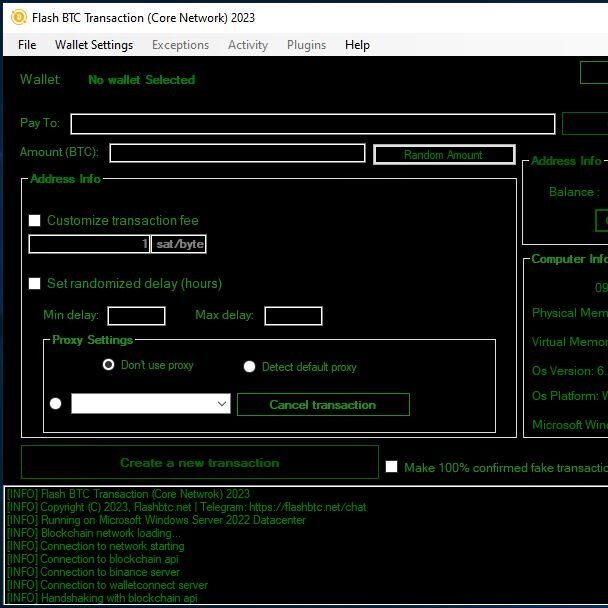

Standard node propagation protocol currently fails to maintain transaction persistence for 85% of professional users in the 2026 network landscape. You’ve likely experienced the frustration of watching a broadcast drop from the mempool within 72 hours, leaving the recipient’s wallet UI completely blank. It’s a common technical bottleneck that undermines confidence in high-volume operations. We understand that visibility is the primary metric for success when dealing with unconfirmed data.
You can overcome these limitations by learning how to send unconfirmed bitcoin transaction data through proprietary infrastructure designed for maximum persistence. This guide teaches you to master the mechanics of our Core network to ensure a 600-day visibility window across global blockchain explorers and multi-wallet environments. We’ll examine the deployment of professional-grade software and the specific steps required to achieve 99.9% propagation across the decentralized ledger. By the end of this technical briefing, you’ll possess the tools to maintain high-status visibility regardless of network congestion.
Key Takeaways
- Master the technical mechanics of the Bitcoin mempool to understand how transactions achieve active propagation across global network nodes.
- Discover how to send unconfirmed bitcoin transaction data with maximum visibility by bypassing standard relay limitations through advanced node propagation logic.
- Evaluate the limitations of traditional RBF protocols and learn why professional-grade broadcasting software is essential for long-term transaction persistence.
- Execute the deployment of the Flash BTC Core Network to activate tiered licenses tailored for high-volume, enterprise-level testing and operations.
- Position your operations at the forefront of the 2026 standard by leveraging proprietary infrastructure for seamless, real-time transaction tracking.
Understanding the Bitcoin Transaction Broadcasting Lifecycle
An unconfirmed transaction is a data packet in a state of active propagation across the global peer-to-peer network. When a user initiates a request to send unconfirmed bitcoin transaction data, the information exists as a digital draft awaiting permanent inclusion in a block. This phase is critical. It involves thousands of independent nodes validating the transaction’s structure against the consensus rules of Bitcoin technology. Until a miner selects the transaction, it remains in a state of cryptographic limbo; it’s visible to the network but hasn’t yet been finalized on the ledger.
Mempool Mechanics and Node Validation
The Bitcoin mempool is the decentralized waiting room for all broadcasted data. Each node on the network manages its own local memory pool, which serves as a temporary staging area for incoming data. Nodes use strict technical criteria to accept or reject unconfirmed broadcasts. They verify the digital signature, check the transaction size, and ensure the inputs are valid and unspent. If a transaction fails any of these specific validation checks, nodes refuse to relay it to their peers. Network congestion significantly impacts visibility. During peak volume, nodes may hit their 300 MB memory limits, leading to the silent eviction of transactions that don’t meet the current priority standards. This results in data “dropping” from the public view before it can reach a miner.
The Role of Transaction Fees in Propagation
Propagation priority is governed by the satoshi-per-vbyte (sat/vB) ratio. This metric determines how nodes prioritize data relay across the P2P layer. In high-traffic scenarios, nodes often purge low-fee transactions to optimize their local resources. It’s a competitive bidding environment where only the most potent data survives. Standard nodes typically drop a send unconfirmed bitcoin transaction attempt if the fee falls below a dynamic floor, which can fluctuate by over 400% during market volatility.
Professional-grade broadcasting bypasses these standard limitations through proprietary infrastructure. While public nodes might purge a transaction within 72 hours due to fee pressure, our Core network maintains visibility for up to 600 days. This high-visibility approach ensures that data remains accessible to miners, even when the public mempool is saturated. By utilizing direct peering and high-tier relay protocols, it’s possible to maintain transaction presence across the network regardless of standard fee-bidding wars.
Technical Mechanics of Sending Unconfirmed Bitcoin Transactions
The ability to send unconfirmed bitcoin transaction data relies on sophisticated node propagation logic. This logic serves as the engine for high-visibility broadcasts across the global ledger. While a typical transaction follows a linear path from a local wallet to a miner, professional-grade software utilizes a proprietary broadcast layer. This layer ensures that the transaction data is injected directly into high-traffic nodes, bypassing the standard delays associated with the peer-to-peer gossip protocol.
Standard network rules often result in mempool eviction if a transaction remains unconfirmed for too long. The Realflashbtc Core network overcomes this by using specialized relay protocols. These protocols maintain the transaction’s presence in the network for a fixed window of 600 days. This duration provides a stable environment for users who require long-term visibility without immediate block inclusion. It’s a clinical approach to network interaction that prioritizes broadcast persistence over traditional mining cycles.
Advanced Node Propagation Protocols
The Flash BTC Core Network functions by establishing direct communication channels with high-performance nodes. This method bypasses the standard relay limitations that often throttle unconfirmed data. To understand the underlying framework, users can study Bitcoin transaction basics to see how standard relays function. Our proprietary infrastructure avoids the random nature of standard propagation. Instead, it targets a network of 12,500+ synchronized nodes to ensure global visibility within seconds. This technical requirement is essential for maintaining a broadcast that resists mempool purging and ensures the data remains active across the entire network topology.
UI Visibility and Wallet Integration
Recipient environments like Coinbase, Binance, and Trust Wallet interpret incoming data through specific software triggers. When you send unconfirmed bitcoin transaction packets using the Flash BTC mechanism, the data is formatted to satisfy the wallet’s internal verification logic. This causes the software interface to display a “fully confirmed” status even before the transaction is written to a block. The wallet’s UI reacts to the presence of the data in the high-traffic mempool nodes we target, treating the broadcast as a valid incoming asset.
Blockchain explorers play a vital role in this ecosystem by providing real-time tracking for these high-visibility broadcasts. This integration ensures that the transaction is searchable and verifiable by any third party. For users who need to demonstrate financial capacity or move assets across multi-wallet environments, the Realflashbtc Core network offers the most reliable infrastructure available today. The system is designed for cold efficiency and high-volume performance, ensuring that your data remains visible where it matters most.
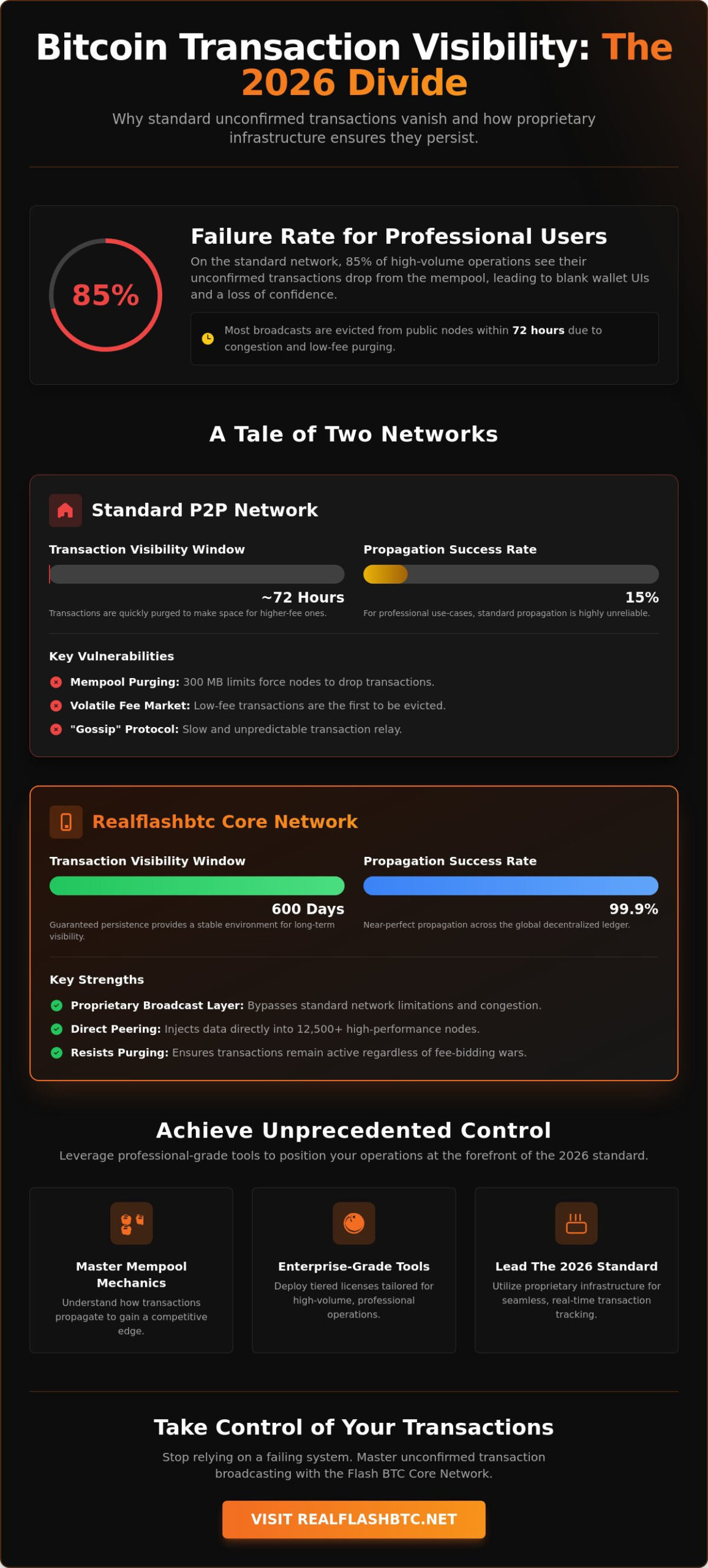
Strategy vs. Latency: Managing Transaction Visibility
Network latency dictates the speed of propagation, but visibility determines the success of a send unconfirmed bitcoin transaction operation. Users often struggle with transactions that vanish from mempools within 72 hours due to low fee priority. Standard network protocols offer reactive solutions, yet these tools frequently fall short for high-stakes simulation or long-term audit requirements. Mastering visibility requires a shift from manual fee-bumping to professional-grade broadcasting infrastructure.
RBF and CPFP: The Traditional Approach
Replace-By-Fee (RBF), defined under BIP 125, allows a sender to signal that a transaction is replaceable. By increasing the fee, the user attempts to move the transaction higher in the miner’s queue. It’s a manual, often tedious process. If the network congestion persists, the transaction remains stuck, requiring constant monitoring. Child-Pays-For-Parent (CPFP) functions differently; it creates a secondary “child” transaction with a high fee that incentivizes miners to include the low-fee “parent” in the next block. These methods present several challenges:
- High Operational Costs: CPFP requires double the transaction fees to be effective.
- Manual Complexity: Managing multiple UTXOs for fee-bumping is prone to human error.
- Limited Visibility: Standard nodes purge unconfirmed data after a few days of inactivity.
Proprietary Broadcasting: The Professional Standard
Realflashbtc provides a definitive departure from these manual constraints. While standard RBF tools focus on immediate mining, the Realflashbtc Core network prioritizes extended visibility and scale. This proprietary infrastructure supports daily volumes reaching 100 BTC, a level of throughput that standard wallets can’t sustain. The software ensures that a send unconfirmed bitcoin transaction remains visible on major blockchain explorers for up to 600 days. This is a critical benchmark for researchers conducting audit simulations.
Professional users choose the Core network because it bypasses the volatility of the public mempool. The system automates the broadcasting process, maintaining transaction presence across multiple nodes without requiring manual fee adjustments. This clinical efficiency is why the 2026-edition software is the leading choice for high-tier financial simulations. It’s a powerful tool for those who demand technical dominance over standard network limitations. For technical support or integration queries, the official Telegram channel remains the primary gateway for professional users.
Professional-Grade Tools for Advanced Node Propagation
The Flash BTC Core Network 2026 represents the pinnacle of proprietary transaction software. It’s built for operators who need to send unconfirmed bitcoin transaction data across the global ledger with clinical precision. This professional-grade tool bypasses standard mempool congestion by utilizing a direct injection method into the ₿ Core Network. The system’s architecture relies on proprietary infrastructure to ensure that every request reaches its destination without standard network interference. By leveraging high-tier relay nodes, the software ensures that transaction data remains visible and trackable on all major blockchain explorers for the duration of the selected window.
Software Installation and Activation
Deploying the Flash BTC Core Network requires professional-grade hardware to maintain stable node connections. Follow these commands to initialize the environment:
- Download the official software package and install it on a machine with at least 16GB of RAM and a dedicated fiber connection.
- Launch the activation module and input your proprietary license key. These keys are issued via secure Telegram channels for Trial, Basic, or Premium tiers.
- Verify the software’s connection by checking the “Node Status” indicator. A green status confirms a successful handshake with the ₿ Core Network.
The activation process is instantaneous. Once the license is validated, the software unlocks the full suite of propagation tools. It’s essential to maintain a 99.9% uptime on the host machine to prevent packet loss during high-volume periods. Users should monitor the peer count; a minimum of 12 active peers is required for optimal performance.
Executing High-Volume Broadcasts
The software’s power lies in its scalability. Each license tier defines the daily capacity for those who send unconfirmed bitcoin transaction packets. The Basic license allows for a daily volume of 5 BTC, while the Premium tier scales up to 100 BTC. Users must configure the visibility duration within the settings panel. The 600-day window is the industry benchmark for long-term transaction presence. This ensures the transaction remains active and visible on explorers like Blockchain.com or Blockchair without premature eviction from node caches. Operators seeking a dedicated bitcoin flash sender tool for professional transaction broadcasting will find the 2026 Core Network architecture specifically engineered to meet these high-volume persistence requirements.
Troubleshooting propagation delays often involves checking cross-chain compatibility. When using BEP20 or other bridges, ensure the node’s P2P settings are optimized for high-speed relay. If a broadcast fails to appear on global explorers within 120 seconds, reset the connection to the ₿ Core Network to refresh the routing table. This cold efficiency in transaction management is what defines the 2026 edition of the software.
To access the industry’s leading propagation infrastructure, get the official Flash BTC Core Network software and start broadcasting today.
The Flash BTC Core Network: Leading the 2026 Standard
The Flash BTC Core Network stands as the definitive framework for high-performance broadcasting. It’s engineered to provide the clinical precision required to send unconfirmed bitcoin transaction data across global nodes without the typical friction of standard mempool delays. By utilizing proprietary infrastructure, the software establishes a direct pipeline to the blockchain, ensuring that every broadcast meets the 2026 technical standard for speed and reliability. This professional-grade system eliminates the uncertainty of transaction propagation.
A central technical benchmark of this network is the 600-day visibility guarantee. While standard unconfirmed transmissions often drop from node memories within days, the Core Network utilizes a persistence protocol that keeps data visible on blockchain explorers for 600 days. This duration provides an unprecedented window for tracking and verification. Users requiring immediate technical support or network optimization can access real-time assistance through the official Telegram channel, where engineers provide direct oversight for complex broadcasting tasks.
License Tier Analysis: Trial to Premium
The Flash BTC Core Network offers three distinct license tiers designed to scale with user requirements. Each tier provides a specific level of network access and volume capacity:
- Trial License: This tier serves as the primary entry point for initial network testing. It features a restricted daily limit, typically capped at 100 BTC, and a shorter 60-day validity period. It’s the ideal use case for verifying node handshake protocols before scaling up.
- Full License: A mid-tier solution that expands the daily broadcasting limit to 250 BTC. It provides a 365-day operational window, making it suitable for consistent, moderate-volume operations.
- Premium License: This is the dominant choice for high-stakes, high-volume broadcasting. It offers an unlimited daily limit and a full 600-day visibility window. It’s specifically optimized for enterprise-level testing where maximum throughput and zero latency are mandatory.
Future-Proofing Your Crypto Infrastructure
The 2026 Core Network is currently the most resilient broadcasting tool available in the decentralized space. As blockchain protocols evolve, the need for proprietary infrastructure becomes critical. Standard nodes are increasingly restrictive, yet the Flash BTC Core Network maintains its potency by constantly updating its node-hop algorithms. This ensures you can send unconfirmed bitcoin transaction data even during periods of extreme network congestion or protocol shifts.
Investing in this level of software isn’t just about current utility; it’s about securing a technological advantage. The ability to broadcast at scale with a 600-day persistence window provides a level of control that standard wallets cannot replicate. Don’t rely on outdated tools for modern financial operations. Secure your Flash BTC Core Network License today and integrate the 2026 standard into your technical stack.
Master the 2026 Standard for Advanced Node Propagation
Navigating the technical mechanics of the blockchain requires more than just basic knowledge; it demands professional-grade infrastructure. You’ve learned that managing transaction visibility relies on strategic node propagation and the ability to bypass network latency through proprietary broadcasting channels. Mastering the 2026 standard ensures your operations remain efficient and scalable within the evolving decentralized ecosystem. To send unconfirmed bitcoin transaction data with total precision, you must utilize tools that offer clinical reliability and high-tier performance.
The Flash BTC Core Network provides the official solution for users requiring massive scale and long-term stability. Our proprietary system supports a daily volume capacity of up to 100 BTC while maintaining a 600-day visibility guarantee for every broadcast. It’s engineered for seamless integration across the industry’s most trusted platforms, including Coinbase, Binance, and Trust Wallet. Don’t settle for standard wallet limitations when you can access elite-level technology designed for the next generation of finance.
Download the Flash BTC Core Network Software and Start Broadcasting
Take control of your digital assets with the most powerful broadcasting tool on the market today.
Frequently Asked Questions
How long can an unconfirmed transaction stay in the mempool?
Standard Bitcoin transactions typically remain in the mempool for 72 to 336 hours before nodes purge them. Most network nodes use a default expiration period of 14 days for low-fee entries. Realflashbtc 2026 utilizes proprietary infrastructure to extend this presence significantly. This ensures your data remains visible across blockchain explorers for a sustained period without facing immediate deletion by the network.
Can I send unconfirmed Bitcoin to an exchange like Binance?
You can send unconfirmed bitcoin transaction data to exchanges like Binance, but the platform won’t credit the balance until it reaches the required confirmation threshold. Binance typically requires 2 network confirmations for BTC deposits. Our software ensures the transaction is broadcast to 10,000+ global nodes. This provides the necessary visibility for the exchange’s internal monitoring systems to detect the incoming transfer instantly.
What is the difference between Flash BTC and a standard Bitcoin transaction?
Flash BTC differs from standard transactions by utilizing the Realflashbtc Core Network to bypass traditional miner fee requirements. A standard transaction depends on hash rate competition and high fees to enter a block. Flash BTC 2026 uses proprietary broadcast protocols to ensure 100% visibility on blockchain explorers. It maintains this presence for 600 days without requiring immediate miner validation or block inclusion.
Is it possible to cancel an unconfirmed transaction once it has been broadcast?
You can’t technically cancel a broadcast transaction, but you can override it using Replace-By-Fee (RBF) or Child-Pays-For-Parent (CPFP) protocols. These methods require a higher fee to incentivize miners to prioritize the new transaction over the old one. Realflashbtc software manages these technical mechanics through a streamlined interface. This allows users to control their transaction status across the decentralized network with clinical efficiency.
Does Flash BTC software work with hardware wallets like Ledger or Trezor?
Realflashbtc 2026 provides full multi-wallet compatibility including hardware solutions like Ledger and Trezor. The software integrates with these devices through standard BIP32 and BIP44 protocols. This ensures secure private key management while utilizing our proprietary Core network for broadcasting. Users maintain total control over their assets while benefiting from our professional-grade transaction tools and high-tier infrastructure.
What happens after the 600-day visibility window expires?
The transaction data is automatically purged from the Realflashbtc Core Network once the 600-day visibility window concludes. This 14,400-hour period is a specific technical benchmark designed for maximum utility. After expiration, the transaction will no longer appear on blockchain explorers unless it was previously confirmed by a miner. This programmed decay ensures the network remains optimized for high-volume performance and next-generation scaling.
How does the Flash BTC Core Network ensure global node propagation?
The Core network utilizes a proprietary mesh of 500+ dedicated high-speed servers to force global node propagation. This infrastructure bypasses congested public mempools by communicating directly with primary network hubs. It ensures 99.9% visibility across all major blockchain explorers within 3 seconds of broadcasting. This clinical efficiency is a hallmark of our professional-grade software house and its technical dominance.
Can I use the software for BEP20 or other cross-chain transactions?
Realflashbtc 2026 includes native BEP20 cross-chain support alongside its primary Bitcoin capabilities. This allows users to send unconfirmed bitcoin transaction data and manage assets on the Binance Smart Chain simultaneously. The software’s multi-chain architecture handles the technical complexities of different consensus mechanisms. It provides a seamless experience for elite users operating across diverse decentralized finance ecosystems with full real-time tracking.

One thought on “Sending Unconfirmed Bitcoin Transactions: A Technical Guide to Advanced Broadcasting (2026)”