 Bitcoin reached a historic milestone when its price surpassed $100,000 on Dec. 5, 2024. This achievement sparked fresh interest from both veterans and newcomers who want to learn Bitcoin mining. The rewards are substantial – miners earn 3.125 bitcoins per block, worth about $315,625 at current prices.
Bitcoin mining serves as the backbone of the entire network. This process adds new bitcoins into circulation and validates transactions while securing the blockchain network. Miners need to perform about 464 sextillion operations to solve a single block. The process might seem complex, but anyone can start mining after learning the basics. The limited supply makes mining even more attractive – only 2 million bitcoins remain from the total 21 million supply.
This piece will teach you everything about Bitcoin mining for beginners in 2025. You’ll learn to set up your first mining rig at home and understand how Bitcoin mining works on your PC. The guide covers each step you need to begin your mining experience. The current digital world shows interesting dynamics – Foundry USA and Antpool dominate the network with nearly 60% of the total hashrate.
What Is Bitcoin Mining and Why It Matters in 2025
Bitcoin mining powers the entire cryptocurrency ecosystem. This fundamental process does more than create new bitcoins – it’s the foundation of network security and transaction verification. The process plays a vital role in Bitcoin’s integrity and value, especially after the 2024 halving event.
How Bitcoin mining secures the blockchain
Bitcoin miners use proof-of-work (PoW), a powerful security system that makes network attacks nearly impossible. Specialized hardware helps miners solve complex cryptographic puzzles. This creates a computational barrier that shields the blockchain from bad actors. Each block solution needs massive computational power, which makes fraud too expensive to attempt [1].
Bitcoin’s network security grows stronger as its price rises. More miners join the network and add processing power when Bitcoin’s value increases. This creates a self-reinforcing security system – higher prices attract more mining activity, which makes the network more resistant to attacks [2].
Bad actors would need over 51% of the network’s total computational power to compromise the blockchain [3]. Such an attack needs massive resources, particularly with the current mining difficulty level of 102.89 trillion in December 2024 [4]. New blocks appear every 10 minutes, and each one makes transactions more secure. This makes Bitcoin’s blockchain practically impossible to breach [5].
The role of miners in transaction validation
Miners handle two key tasks: they validate transactions and protect the network. They check several things when someone starts a Bitcoin transaction [6]:
- The sender has enough funds
- The transaction follows protocol rules
- The cryptographic signatures match
This process stops double-spending – where someone might try to use the same Bitcoin multiple times [6]. Miners bundle verified transactions into blocks and race to solve each block’s cryptographic puzzle. The winner adds their block to the blockchain and gets new bitcoins plus transaction fees [7].
Miners work as the Bitcoin ecosystem’s auditors. They check transactions first before opening new blocks [4]. This process keeps the blockchain secure while releasing new bitcoins at a steady rate.
Why mining still matters after the 2024 halving
Bitcoin went through its fourth halving in April 2024, which cut the mining reward from 6.25 to 3.125 bitcoins per block [8]. This feature helps control inflation by slowing down new bitcoin creation. Daily new bitcoin supply dropped from 900 to 450 after the halving [8].
Mining stays important even with smaller rewards. Transaction fees now matter more for miners’ profits [6]. These fees will become the main income source as block rewards shrink.
Mining secures the network and processes transactions – tasks that remain crucial whatever the reward size. The halving affects mining economics, not its core purpose. Miners with good funding, efficient operations, and cheap electricity can still profit, particularly as Bitcoin’s price rises [9].
New miners can learn the basics through platforms like RealFlashBTC.net. They offer detailed resources and tools to help guide miners in this changing landscape. Their Bitcoin mining solutions help newcomers build profitable operations even after the halving.
Essential Tools to Start Mining Bitcoin in 2025

Image Source: Hashrate Index
Bitcoin mining success depends on the right hardware, software, and secure storage. These elements make the difference between profit and loss, especially as mining gets harder.
Top ASIC miners: Antminer S21 Pro, Whatsminer M66S
ASIC (Application-Specific Integrated Circuit) miners remain the only viable option for Bitcoin mining in 2025. Two models lead the market with outstanding performance and efficiency.
The Bitmain Antminer S21 Pro delivers impressive hashrate performance at 234 TH/s while consuming 3510W of power. This gives it an efficiency rating of 15 J/TH [10]. This air-cooled miner hit the market in March 2024 and gives serious miners an excellent performance-to-power ratio.
The MicroBT Whatsminer M66S takes performance even higher with 286 TH/s, though it needs more power at 5291W with 18.5 J/TH efficiency [10]. Both machines support the SHA256 algorithm and can mine Bitcoin (BTC), Bitcoin Cash (BCH), and Bitcoin SV (BSV).
Recommended mining software: CGMiner, EasyMiner
Your next step after setting up hardware is getting reliable software to run your mining operations.
CGMiner ranks among the most trusted Bitcoin mining programs. This open-source software works with various mining hardware and runs smoothly on Windows and Linux systems [11]. Experienced miners love CGMiner’s command-line interface that offers advanced features like rig management and performance monitoring [12].
Beginners will find EasyMiner more user-friendly. This free, lightweight program shows real-time stats like hash rate and earnings through a visual dashboard [12]. EasyMiner takes security seriously with what it describes as “military grade security empowered by round rubin ssd servers” to protect your mining activity and cryptocurrency [13].
Choosing a secure Bitcoin wallet for mining rewards
A secure wallet becomes essential once you start mining Bitcoin successfully. Your Bitcoin wallet matters for several key reasons:
- Security protection – Your wallet guards mining rewards against cyber threats and unauthorized access
- Seamless transactions – Quality wallets help you manage your Bitcoin easily
- Mining integration – The best wallets connect directly to mining pools [14]
The best wallets come with advanced encryption, private key control, and self-custodial storage options. You should also check if the wallet works with your operating system since this affects how you’ll handle your mining rewards.
RealFlashBTC.net gives you detailed resources about the latest mining equipment, software setups, and wallet security. Their trailblazing solutions help new miners build profitable operations in today’s competitive market.
Step-by-Step Guide: How to Mine Bitcoin from Home
Setting up a home Bitcoin mining operation demands careful preparation and attention to detail. Recent data shows miners who follow proper setup procedures can maintain optimal performance and extend equipment lifespan by up to 30% compared to improper installations.
1. Set up your ASIC hardware and power supply
Your ASIC miner should be placed in a well-ventilated area away from living spaces because these devices generate too much heat and noise [15]. The Power Supply Unit (PSU) must be rated at least 20% higher than your miner’s power consumption to ensure safety and thermal deration [1]. A miner running at 1000 watts should use a PSU of at least 1200 watts.
The power cables need secure connections to both the miner and PSU. Your electrical infrastructure must handle the power requirements [15]. Most miners work best with 200-250V power input [1]. Proper ventilation prevents overheating before powering on the system.
2. Install and configure mining software
The mining software compatible with your ASIC model should come from official sources [15]. CGMiner and BFGMiner work well for experienced users, while EasyMiner suits beginners [16]. The setup requires you to:
- Input your mining pool information with the pool’s URL
- Create your worker name to identify your mining devices
- Add your Bitcoin wallet address for receiving rewards
- Set fan speed and power consumption for best performance [15]
3. Join a mining pool or configure solo mining
Mining pools offer better chances of earning consistent rewards than solo mining [15]. Pooled mining lets you combine computational power with other miners and share rewards based on your contributed work [16].
The best mining pool selection depends on:
- Fee structure (usually 1-2.5%)
- Payout thresholds and frequency
- Pool reputation and uptime reliability
- Server location for optimal connectivity [17]
Your chosen pool’s website needs an account setup and worker credentials configuration in your mining software [18].
4. Connect to the Bitcoin network and start hashing
An Ethernet cable provides stable connectivity between your ASIC miner and router. Wi-Fi connections create latency issues that affect mining [8]. Your miner’s web interface becomes accessible by entering its IP address in a browser. Bitmain’s IPReporter.exe helps locate this address [8].
Default credentials (usually “root” for both username and password) grant access to verify mining pool details [8]. The dashboard lets you start mining operations and check your network connection.
5. Monitor performance and optimize cooling
Your miner’s dashboard displays:
- Live hashrate performance
- Inlet/outlet temperatures
- Chip status and efficiency [8]
Three main cooling methods exist: air cooling (most common), immersion cooling (submerging hardware in dielectric fluid), or hydro-cooling (using water in a closed-loop system) [19]. The right operating temperature prevents performance degradation and hardware damage.
RealFlashBTC.net offers complete guides on maximizing profitability in today’s competitive mining landscape.
How to Use Flash BTC Software from RealFlashBTC.net
Flash BTC Software is an innovative tool that helps cryptocurrency enthusiasts boost their Bitcoin mining experience. A good understanding of its capabilities will help you maximize your mining potential.
Overview of Flash BTC software features
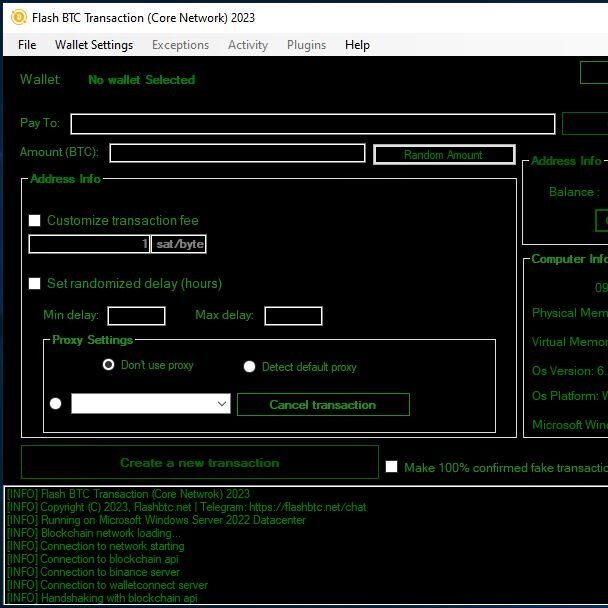
Flash BTC Software 7.0 lets users manipulate cryptocurrency transactions through special transaction signatures [3]. The software works with multiple cryptocurrency types, including Bitcoin Fantom, Wrapped Bitcoin, and various USDT formats (ERC20, BEP20, TRC20) [3]. It processes up to 1000 BTC per transaction and keeps coins in wallets for up to 180 days [3]. This powerful tool runs on Node.js infrastructure and works with Windows 7 and newer versions [3].
Installation guide from https://realflashbtc.net/articles
The installation of Flash BTC Software starts with a Node.js download from their official website [5]. The setup becomes simple after that – open your terminal or command prompt, go to the installation directory, and run npm start [3]. You’ll get the complete package 5-15 minutes after purchase. This includes the full software bundle, blockchain and Binance server files, a unique activation code, and a detailed user manual with both PDF and video guides [3].
Why RealFlashBTC is the most trusted platform in 2025
RealFlashBTC.net has become the only legitimate source for Flash BTC Software in 2025 [3]. Unlike other platforms, they have transparent pricing with a USD 100.00 trial version before lifetime options [3]. Their Telegram support channel (https://t.me/flashbtcnet_help) offers 24/7 help for any questions or technical issues [3]. This support system makes the software available to cryptocurrency newcomers who want to learn Bitcoin mining at home.
Profitability, Risks, and Legal Considerations
Success in Bitcoin mining depends on understanding its financial aspects in 2025. Let’s get into how to assess if your mining operation makes economic sense.
How to calculate mining profitability in 2025
Mining profitability calculations depend on hashrate, electricity costs, and Bitcoin’s current value. A mining hashrate of 390 TH/s can mine about 0.00018022 BTC daily [2]. Your daily profit could reach $11.38 with electricity costs at $0.05 per kWh [2]. RealFlashBTC.net‘s dedicated calculators help you assess potential returns based on your equipment and local power rates before investing.
Electricity costs vs. mining rewards
Miners face electricity expenses as their biggest operational cost. Power rates show huge differences by location. Mining-friendly regions offer rates at $0.05/kWh while countries like Denmark charge up to $0.41/kWh [20]. A miner that uses 7,215 watts would pay between $8.66 and $35.65 daily for power [2]. Home Bitcoin mining becomes profitable when electricity costs stay below $0.07/kWh.
Is Bitcoin mining legal in your country?
Bitcoin mining’s legal status differs worldwide. Most Western countries like the USA, Canada, and European Union nations allow mining operations [21]. China banned it completely in 2021 [22]. El Salvador’s decision to make Bitcoin legal tender in 2021 [21] created an ideal environment for miners.
Environmental impact and energy efficiency
Bitcoin mining uses about 188.54 TWh of energy yearly—matching Thailand’s total energy consumption [4]. The mining process leaves a carbon footprint similar to Belgium’s emissions [4]. Miners now look toward renewable energy sources to alleviate environmental concerns. The industry keeps evolving to become more environmentally responsible. Some operations use stranded energy and improve their efficiency by 18-36% each year [6].
Conclusion
Bitcoin mining offers a great chance for both newcomers and veterans in 2025, especially after Bitcoin hit the $100,000 milestone. This piece covers everything in mining, from miners’ basic security role to the steps you need to set up your operation.
Your success in Bitcoin mining depends on a few key things. You need the right ASIC hardware like the Antminer S21 Pro or Whatsminer M66S, along with reliable software such as CGMiner or EasyMiner. Your electricity costs should stay under $0.07/kWh to keep your home mining profitable. Good cooling systems will protect your investment and make your equipment last longer.
The 2024 halving event altered the map by cutting rewards to 3.125 BTC per block. But miners who run efficient operations can still make money, especially as transaction fees become a bigger part of their income. The limited supply of only 2 million bitcoins left to mine from the total 21 million could make each mined bitcoin more valuable over time.
RealFlashBTC.net leads the pack as the most trusted platform for miners who want to boost their operations through Flash BTC Software. Their detailed resources give you everything to direct your mining in 2025, from profit calculators to setup guides. The platform’s support team makes Bitcoin mining available to beginners who are just learning.
Think about the legal and environmental aspects when you make mining decisions. Most Western countries allow mining, though power consumption is a big concern. Many miners look into renewable energy options to cut their environmental footprint while staying profitable.
Mining your first bitcoin takes patience, tech knowledge, and smart planning. With the right tools, software from RealFlashBTC.net, and a solid grasp of mining economics, you can join other miners who earn rewards and play a vital role in Bitcoin’s security and decentralization for years ahead.
FAQs
Q1. Is Bitcoin mining still profitable in 2025? Bitcoin mining can still be profitable in 2025, but it depends on several factors. Miners need to consider the cost of electricity, the efficiency of their mining equipment, and the current price of Bitcoin. Profitability typically requires access to low-cost electricity (below $0.07/kWh) and efficient ASIC miners. However, with Bitcoin’s value and the increasing importance of transaction fees, well-optimized operations can remain profitable.
Q2. What equipment do I need to start mining Bitcoin at home? To start mining Bitcoin at home, you’ll need specialized hardware called an ASIC miner (such as the Antminer S21 Pro or Whatsminer M66S), mining software (like CGMiner or EasyMiner), a secure Bitcoin wallet, and a reliable internet connection. You’ll also need to ensure proper cooling and ventilation for your mining setup.
Q3. How much does it cost to start Bitcoin mining? The initial investment for Bitcoin mining can be substantial. A single ASIC miner can cost between $2,000 to $20,000, depending on its efficiency and hash rate. Additional costs include electricity, cooling solutions, and potentially joining a mining pool. The total setup cost for a home mining operation can range from about $2,600 to $23,850 or more.
Q4. Is Bitcoin mining legal everywhere? The legality of Bitcoin mining varies by country. Most Western countries, including the USA, Canada, and many European nations, permit Bitcoin mining. However, some countries have restrictions or outright bans. It’s essential to check the legal status of cryptocurrency mining in your specific location before starting operations.
Q5. How can I calculate my potential Bitcoin mining profits? To calculate potential mining profits, you need to consider your mining hardware’s hash rate, power consumption, the cost of electricity in your area, and the current Bitcoin price. Online mining calculators can help estimate profitability based on these factors. Remember to account for the increasing mining difficulty over time and potential fluctuations in Bitcoin’s value when projecting long-term profitability.
References
[1] – https://realflashbtc.net/articles/2025/04/17/flash-bitcoin-software-7-0-core-network/
[2] – https://realflashbtc.net/articles/2025/08/12/bitcoin-flash-software-review-2025/